

How to Support Your Child During a School Transition in Dubai
Why School Transitions Are Particularly Significant in Dubai
Dubai's expatriate population has one of the highest transience rates of any city in the world — families arrive, stay for two to five years, and move on. This means school transitions are far more common in Dubai than in most education systems. The average Dubai private school has between 5% and 15% of its student roll change every academic year, as families arrive and depart. Children in Dubai international schools become accustomed to goodbyes — and they also become very good at making new friends.
However, transitioning schools — whether from another country or from a different Dubai school — is genuinely stressful for children and parents alike. Research shows that the quality of the transition experience significantly affects how quickly a child settles, how well they engage academically, and how positively they adjust socially. This guide gives you practical, evidence-based strategies to support a successful transition.
Before the Move: Preparation Matters
- Involve your child in the school selection process: Show them the school's website, photos, and virtual tour. For older children, involve them in school visits. Children who feel part of the decision are more invested in the outcome.
- Research the school's induction process: Ask the admissions team specifically what happens on the first day and first week for new students. Does the school assign a "buddy" or peer mentor? Are there new-student orientation sessions?
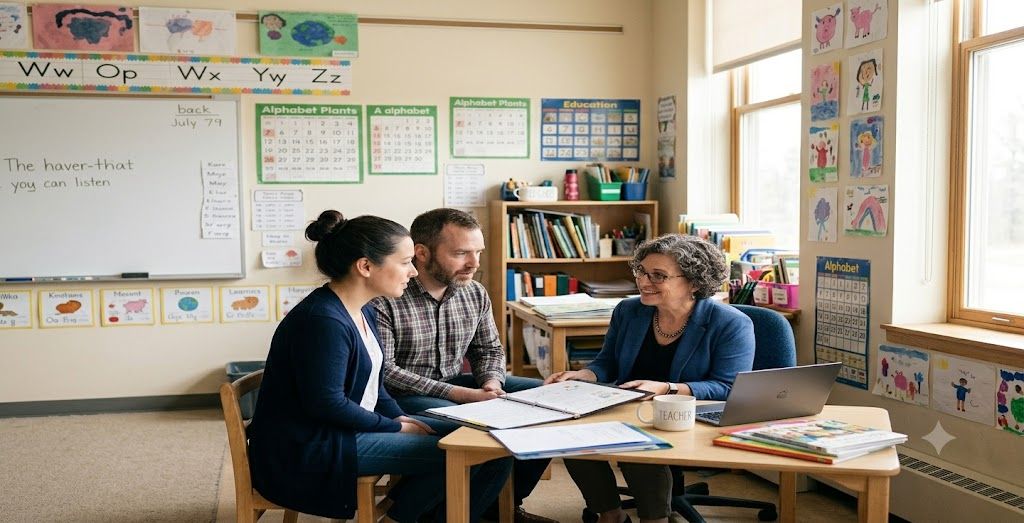
- Connect with the school's pastoral team: Introduce yourself to the Head of Year, form tutor or class teacher before your child starts. Share any relevant background — curriculum changes, social anxieties, learning needs — so they can plan appropriately.
- Prepare your child for curriculum differences: If switching curricula (e.g., from CBSE to British), explain that the style of learning will feel different at first and that this is completely normal. Avoid framing the previous curriculum as "easier" or "harder" — just different.
The First Week: What to Monitor
The first week in a new school is typically a mixture of excitement, anxiety and exhaustion. Children often appear fine at school (performing socially) while being more emotional and volatile at home. This is normal and should not be read as a sign of problems at school.
Watch for genuine red flags during the first week:
- Reports of being unable to find anyone to sit with at lunch more than two or three days in a row
- Specific named individuals being unkind or exclusionary
- Persistent physical symptoms (headaches, stomach aches) on school mornings that disappear by the weekend
- Teachers reporting significant difficulty concentrating or following classroom routines
If these emerge, contact the school's pastoral lead immediately. Early intervention prevents small difficulties from becoming established patterns.
Building Friendships in a New Dubai School
Dubai's international school communities are generally very welcoming to new students — partly because every child has been new at some point, and partly because the highly transient nature of the community means social circles are constantly refreshing. Help your child access social opportunities:
- Sign up for after-school activities in the first week — sport, drama, robotics clubs are excellent social entry points
- Connect with the school's parent community on WhatsApp or the school's parent app — many communities have area-based groups for families in specific residential communities
- Arrange post-school playdates early — for primary children, ask the teacher to help identify suitable peers
- Encourage patience: genuine friendships take 6–12 weeks to develop in a new environment. The first few weeks should be about broad social exposure, not deep bonding.
Academic Catch-Up When Switching Curricula
If your child is switching curricula mid-school — particularly from a more structured system (CBSE, French) to the IB or British — there may be an initial academic adjustment period. Common gaps to address:
- CBSE → British: Students may find analytical writing, extended essays and open-ended project work unfamiliar. Additional support in English comprehension and creative writing is often beneficial.
- American → British: The British system's expectation for deeper subject knowledge in fewer subjects can initially feel overwhelming. Focus on strong revision routines.
- British/American → IB: The interdisciplinary and reflective nature of the IB can surprise students accustomed to more prescriptive curricula. Encourage curiosity and resist the urge to look for "the right answer" in ToK.
Consider one or two targeted tutoring sessions in the first half-term to address any specific curriculum gaps. Many excellent tutors in Dubai specialise in curriculum transition support.
When Your Child is NOT Settling: When to Escalate
If by the end of the first full half-term (approximately six to eight weeks), your child:
- Has not identified at least one or two friends they feel comfortable with
- Continues to have physical symptoms on school mornings
- Expresses consistent unhappiness about school
- Has received concerning feedback from teachers about social integration
... then it is time to have a formal meeting with the school's pastoral lead, SENCO or Year Head. Come with specific observations rather than general concerns. In most cases, the school can implement targeted interventions — social skills groups, buddy programmes, check-ins — that make a significant difference. In a small number of cases, the school may simply not be the right fit, and exploring alternatives (which Search Your School can help with) is the right next step.
Conclusion
School transitions in Dubai are common and, with the right preparation and support, can be genuinely positive experiences. Children who navigate transitions well develop resilience, social flexibility and cultural competency that serve them throughout their lives. Your role as a parent is to prepare without projecting anxiety, monitor without micromanaging, and escalate when genuine signs of difficulty emerge. A well-supported transition usually resolves well within the first school term.
Related Articles
The Parent-Teacher Partnership: A Parent’s Guide to Building the Ultimate Support System
Building a strong partnership with your child's teacher is one of the best ways to boost their confidence, grades, and social skills. This guide offers simple, practical ways to build a unified support system from day one. Proactive Communication: Send a quick introductory email in the first 2–3 weeks of school, and keep the teacher updated on any major changes at home so they can offer extra support. Shared Expectations: Align home and school routines—like using "growth mindset" language during homework—to give your child a consistent, secure environment. Combine Expertise: Your deep knowledge of your child paired with the teacher's professional experience creates a strong safety net so no student slips through the cracks. By treating teachers as teammates, parents can turn school-year friction into a supportive, collaborative success.
Read more →
School Transport vs. Living Close: Managing the Real Costs of School Commutes in Dubai
Choosing between a cheaper neighborhood and a premium hub next to your child's school is a major financial decision for Dubai families. This numbers-driven breakdown compares the true cost of paying for school bus transport from a community like Jumeirah Village Circle (JVC) against paying a rental premium to live next door in a hub like Al Barsha. The Rental Premium Gap: Moving closer to premium school hubs like Al Barsha typically commands a rental premium of AED 30,000 to AED 50,000 per year for a standard family apartment or villa compared to value communities like JVC. The Compounding Bus Tax: School bus fees in Dubai average AED 8,000 to AED 12,000 per child annually; for a family with 3 children, long-distance transport costs alone can reach up to AED 36,000 per year, instantly erasing most of the rental savings. The Heavy Time Toll: Living further away subjects children to a daily time tax of 60 to 90 minutes spent in peak-hour traffic, adding significant stress and reducing time available for sleep, homework, and family life. Ultimately, this guide serves as a practical decision tool showing that cheaper rent is often an illusion once transport costs and multiple children enter the equation. By weighing the raw numbers against lifestyle quality, families can identify the true tipping point where paying a rental premium actually saves both money and peace of mind.
Read more →
Creating a Homework Sanctuary: How to Design a Study Space Kids Actually Want to Use
Creating a dedicated, sensory-friendly study space helps kids focus, build independence, and reduce study fatigue. This practical guide offers simple strategies to transform any corner of your home into an inviting homework spot—no dedicated office required. What you’ll learn: Smart Setup & Ergonomics: Why keeping study areas away from beds protects sleep and keeps kids alert. Sensory Control: How natural light and low digital distraction reduce cognitive fatigue during homework time. Routines & Organization: Simple hacks—like post-school brain breaks and portable supply caddies—that eliminate pre-homework friction. Involving your child in building their study zone builds long-term ownership, turning daily homework battles into calm, predictable wins.
Read more →