

How to Handle School Bullying in Dubai: A Parent's Action Guide
Bullying in Dubai Schools: The Reality
Bullying — defined as repeated, intentional harmful behaviour directed at an individual by one or more people who hold greater social or physical power — occurs in all school communities, including Dubai's private schools. Dubai's highly multicultural, transient school population creates both unique protective factors (many children are experienced at making new friends and navigating difference) and unique risk factors (isolation of newcomers, cultural misunderstandings, clique formation in established communities).
This guide provides clear, step-by-step advice for parents whose child reports bullying in a Dubai school.
Step 1: Listen Without Minimising
When your child tells you they are being bullied, the most important thing you can do in the first conversation is listen fully and validate their experience. Avoid:
- "Are you sure that's what they meant?" (minimising)
- "Just ignore them — they'll stop." (ineffective advice that implies it's the child's problem to manage)
- "What did you do to provoke them?" (blame-shifting)
- "I'll sort this out for you." (removing agency from the child)
Instead: "That sounds really hard. Tell me more about what happened." Take notes of specific incidents, dates and names as your child describes them.
Step 2: Assess the Severity
Not all unkind behaviour is bullying. A single incident, however upsetting, is typically not bullying — it is a conflict or act of unkindness. Bullying requires repetition and a power imbalance. However, the severity of a single incident matters too: a single physical assault or a single incident of serious racist or discriminatory language requires immediate action regardless of whether it fits the technical definition of bullying.
Assess:
- How many times has this happened?
- Is it one person or a group?
- Is it physical, verbal, social (exclusion, rumour-spreading) or online (cyberbullying)?
- Has your child told a teacher, and if so, what happened?
Step 3: Contact the School — The Right Way
Email the class teacher or Head of Year (not the principal — yet). Keep the email factual, specific and non-accusatory:
"Dear [teacher name], I would like to share some concerns about my child [name]'s experience at school. They have described several incidents over the past [time period] involving [first names of alleged bullies if known]. I would appreciate the opportunity to meet and discuss this — ideally within the next three working days. I have noted the specific dates and descriptions of each incident and will bring these to our meeting."
Avoid sending an emotionally charged first email — it is less likely to result in a productive meeting and may be viewed as difficult rather than concerned.
Step 4: The School Meeting
At the meeting, present your documented incidents, listen to the school's response, and agree on specific next steps with named responsibilities and a review timeframe. Good next steps might include:
- Agreed conversations with the alleged bullies (and their parents, if appropriate)
- Increased pastoral monitoring of your child's lunchtime and breaks
- Restorative conversation between your child and the bully (only appropriate where the power imbalance is not severe)
- Daily check-in with your child's form tutor or pastoral lead
Confirm the agreed actions in a follow-up email to the school after the meeting.
Step 5: Escalation if the School Does Not Act
If the school does not act within the agreed timeframe, or if the bullying continues or worsens after school intervention:
- Request a meeting with the Principal or Deputy Principal
- Submit a formal written complaint under the school's complaints procedure (all KHDA schools must have a published complaints procedure)
- If the bullying involves physical assault or criminal behaviour (racist threats, sexual harassment), report to Dubai Police in addition to the school
- File a formal complaint with KHDA if the school fails to respond adequately to a formal complaint
Cyberbullying: A Growing Concern in Dubai Schools
Cyberbullying — bullying conducted through digital platforms, social media, messaging apps or online games — is the fastest-growing form of bullying among Dubai's secondary school population. Key points:
- Screenshot and preserve all evidence before blocking — evidence disappears once the platform session ends
- Report the content to the platform (Instagram, Snapchat, WhatsApp, etc.) as well as to the school
- Dubai Police's cyber crime unit (eCrime.ae) accepts reports of online harassment and cyberbullying — this is a legal matter in the UAE
- The UAE's Federal Cybercrime Law criminalises online defamation, harassment and incitement — serious cases can result in police action
Conclusion
Bullying in Dubai schools is taken increasingly seriously by KHDA and by the best schools in the market. Effective resolution requires documented evidence, a calm and factual approach with the school, agreed specific actions, and a willingness to escalate if those actions are not followed through. Your child's wellbeing is paramount — do not accept empty reassurances. A school that genuinely addresses bullying effectively, openly and resolutely is a school worth staying in; one that minimises, dismisses or deflects is a school worth leaving.
Related Articles
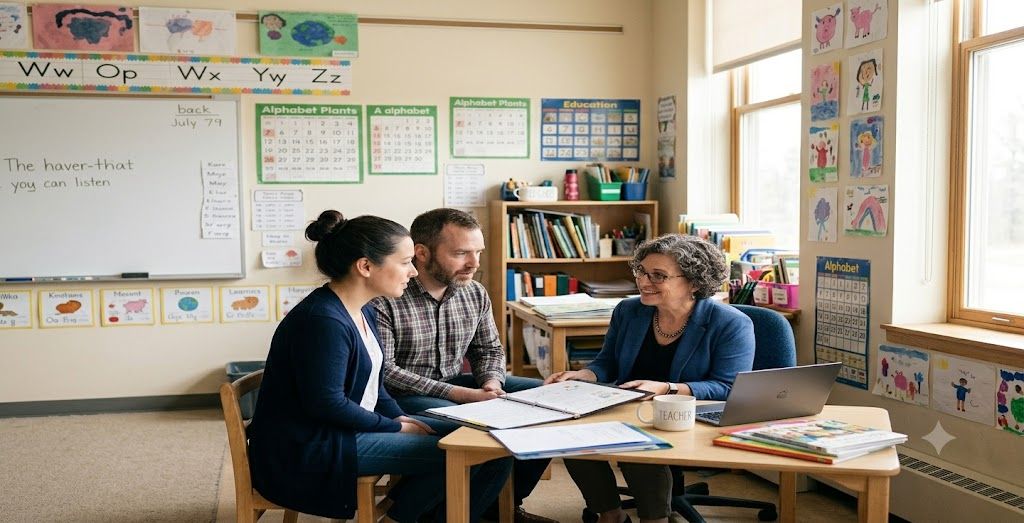
The Parent-Teacher Partnership: A Parent’s Guide to Building the Ultimate Support System
Building a strong partnership with your child's teacher is one of the best ways to boost their confidence, grades, and social skills. This guide offers simple, practical ways to build a unified support system from day one. Proactive Communication: Send a quick introductory email in the first 2–3 weeks of school, and keep the teacher updated on any major changes at home so they can offer extra support. Shared Expectations: Align home and school routines—like using "growth mindset" language during homework—to give your child a consistent, secure environment. Combine Expertise: Your deep knowledge of your child paired with the teacher's professional experience creates a strong safety net so no student slips through the cracks. By treating teachers as teammates, parents can turn school-year friction into a supportive, collaborative success.
Read more →
School Transport vs. Living Close: Managing the Real Costs of School Commutes in Dubai
Choosing between a cheaper neighborhood and a premium hub next to your child's school is a major financial decision for Dubai families. This numbers-driven breakdown compares the true cost of paying for school bus transport from a community like Jumeirah Village Circle (JVC) against paying a rental premium to live next door in a hub like Al Barsha. The Rental Premium Gap: Moving closer to premium school hubs like Al Barsha typically commands a rental premium of AED 30,000 to AED 50,000 per year for a standard family apartment or villa compared to value communities like JVC. The Compounding Bus Tax: School bus fees in Dubai average AED 8,000 to AED 12,000 per child annually; for a family with 3 children, long-distance transport costs alone can reach up to AED 36,000 per year, instantly erasing most of the rental savings. The Heavy Time Toll: Living further away subjects children to a daily time tax of 60 to 90 minutes spent in peak-hour traffic, adding significant stress and reducing time available for sleep, homework, and family life. Ultimately, this guide serves as a practical decision tool showing that cheaper rent is often an illusion once transport costs and multiple children enter the equation. By weighing the raw numbers against lifestyle quality, families can identify the true tipping point where paying a rental premium actually saves both money and peace of mind.
Read more →
Creating a Homework Sanctuary: How to Design a Study Space Kids Actually Want to Use
Creating a dedicated, sensory-friendly study space helps kids focus, build independence, and reduce study fatigue. This practical guide offers simple strategies to transform any corner of your home into an inviting homework spot—no dedicated office required. What you’ll learn: Smart Setup & Ergonomics: Why keeping study areas away from beds protects sleep and keeps kids alert. Sensory Control: How natural light and low digital distraction reduce cognitive fatigue during homework time. Routines & Organization: Simple hacks—like post-school brain breaks and portable supply caddies—that eliminate pre-homework friction. Involving your child in building their study zone builds long-term ownership, turning daily homework battles into calm, predictable wins.
Read more →