

Private Tutoring in Dubai: Do Your Children Really Need It?
Dubai's Tutoring Culture: A Reality Check
Private tutoring is ubiquitous in Dubai. In the Indian community, tutoring is so culturally embedded that many families engage tutors from Year 3 or 4 — often before any academic difficulty has presented. In the British curriculum sector, tutoring typically intensifies in Years 10–11 (GCSE preparation) and Years 12–13 (A-Levels). Across all curricula, the tutoring industry in Dubai generates hundreds of millions of dirhams annually and employs thousands of qualified teachers supplementing or replacing school-based instruction.
But does all this tutoring genuinely benefit children — or does it create dependency, erode intrinsic motivation, and add unnecessary cost and schedule pressure? The answer, as with most things in education, is: it depends.
When Tutoring Genuinely Helps
1. Bridging a Specific Knowledge Gap
If a student has missed significant school time due to illness, relocated mid-year, or is transitioning between curricula (e.g., CBSE to British), targeted tutoring to address specific knowledge gaps is genuinely valuable. The key word is "targeted" — identified gaps, specific content, time-limited support until the gap is closed.
2. Exam Technique and Strategy
Understanding how to answer IGCSE, A-Level or IB examination questions is a specific skill that not all classroom teachers have time to teach explicitly. Tutors who specialise in examination technique — teaching students how to structure long-answer questions, manage time in exams, decode mark schemes — can make a significant difference to results.
3. SEND-Related Learning Support
Children with dyslexia, dyscalculia, ADHD or other learning differences often benefit significantly from specialist tutoring using evidence-based interventions (structured literacy for dyslexia, specific mathematics intervention programmes, executive function coaching for ADHD). This tutoring supplements — it does not replace — school-based SEND support.
4. Confidence Building After a Setback
A child who has received poor results, experienced a difficult teacher relationship or fallen behind through anxiety can benefit from the one-to-one attention of a skilled tutor who helps rebuild confidence and re-engage with the subject. The relationship and the pace can be calibrated in a way that whole-class teaching cannot match.
When Tutoring Does Not Help (or Actively Harms)
Remedying Poor Teaching at School
If your child's school is consistently under-delivering — poor teaching, disorganised curriculum delivery, lack of feedback — the right response is to address the school quality problem, not compensate with expensive private tutoring. Tutoring that papers over school failure is an expensive and unsustainable patch.
Supplementing an Already-Full Schedule
Children who are already attending school five days a week, playing team sports twice a week and attending music lessons cannot realistically absorb additional productive tutoring time. Sleep and unstructured play are not optional — they are neurologically essential for learning consolidation. A child who is already stretched will gain little from additional instruction and may become significantly more anxious.
Parental Anxiety Rather Than Child Need
The most honest and uncomfortable truth about Dubai's tutoring culture: a significant proportion of tutoring is driven by parental competitive anxiety rather than genuine child need. A child achieving 75% in mathematics who is perfectly on track for their target grade does not benefit from additional mathematics tutoring — they benefit from confidence, sleep and a parent who communicates that their effort is valued regardless of the mark.
Finding the Right Tutor in Dubai
When tutoring is appropriate, finding the right tutor matters enormously. Tips:
- Look for subject-specialist qualifications — a qualified teacher with specific IGCSE/A-Level/IB/CBSE expertise, not a general "academic support" tutor
- Ask for a trial session before committing — chemistry between the tutor and your child is critical
- Set clear, measurable goals with the tutor from the start — what specifically should improve, by when?
- Communicate with the school — good tutors work in alignment with the school, not as a parallel education system
- Typical rates: AED 120–250/hour for qualified teachers; AED 250–500/hour for specialist exam tutors or senior teachers with proven results records
Online vs In-Person Tutoring
Since COVID, online tutoring has become firmly established and is the preferred format for many older students (secondary and above). Advantages: convenience, no commute time, access to tutors outside Dubai. Platforms like Tutopiya, Superprof and Wyzant connect Dubai families with qualified tutors globally. For younger primary children, in-person tutoring is generally more effective due to the attention management and interpersonal rapport it provides.
Conclusion
Private tutoring in Dubai is sometimes necessary, sometimes helpful and sometimes a symptom of anxiety rather than genuine educational need. Apply it surgically — specific gaps, time-limited, with clear goals — rather than as a background anxiety management strategy. A well-chosen school (use Search Your School to find the right one) with a strong learning support department should be your primary resource for academic support, with private tutoring as a targeted supplement when genuinely needed.
Related Articles
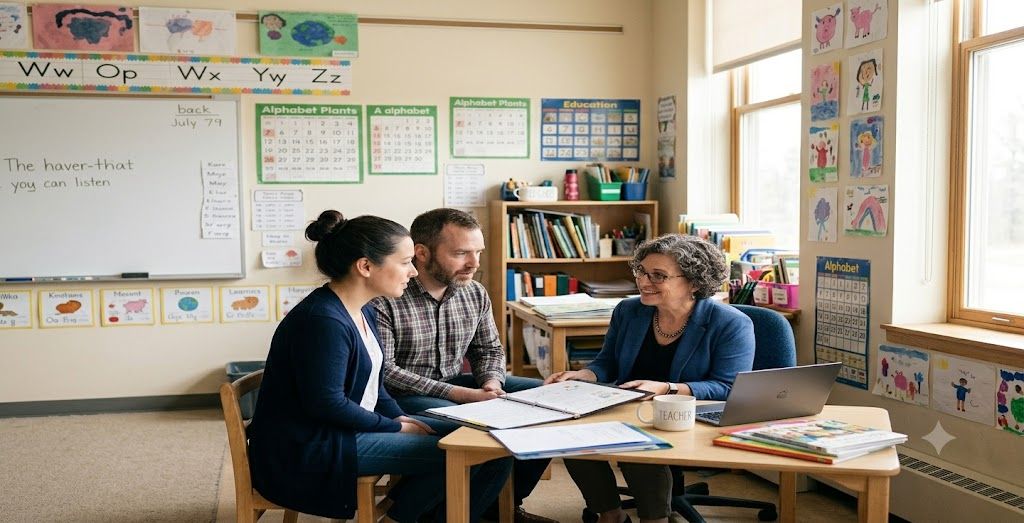
The Parent-Teacher Partnership: A Parent’s Guide to Building the Ultimate Support System
Building a strong partnership with your child's teacher is one of the best ways to boost their confidence, grades, and social skills. This guide offers simple, practical ways to build a unified support system from day one. Proactive Communication: Send a quick introductory email in the first 2–3 weeks of school, and keep the teacher updated on any major changes at home so they can offer extra support. Shared Expectations: Align home and school routines—like using "growth mindset" language during homework—to give your child a consistent, secure environment. Combine Expertise: Your deep knowledge of your child paired with the teacher's professional experience creates a strong safety net so no student slips through the cracks. By treating teachers as teammates, parents can turn school-year friction into a supportive, collaborative success.
Read more →
School Transport vs. Living Close: Managing the Real Costs of School Commutes in Dubai
Choosing between a cheaper neighborhood and a premium hub next to your child's school is a major financial decision for Dubai families. This numbers-driven breakdown compares the true cost of paying for school bus transport from a community like Jumeirah Village Circle (JVC) against paying a rental premium to live next door in a hub like Al Barsha. The Rental Premium Gap: Moving closer to premium school hubs like Al Barsha typically commands a rental premium of AED 30,000 to AED 50,000 per year for a standard family apartment or villa compared to value communities like JVC. The Compounding Bus Tax: School bus fees in Dubai average AED 8,000 to AED 12,000 per child annually; for a family with 3 children, long-distance transport costs alone can reach up to AED 36,000 per year, instantly erasing most of the rental savings. The Heavy Time Toll: Living further away subjects children to a daily time tax of 60 to 90 minutes spent in peak-hour traffic, adding significant stress and reducing time available for sleep, homework, and family life. Ultimately, this guide serves as a practical decision tool showing that cheaper rent is often an illusion once transport costs and multiple children enter the equation. By weighing the raw numbers against lifestyle quality, families can identify the true tipping point where paying a rental premium actually saves both money and peace of mind.
Read more →
Creating a Homework Sanctuary: How to Design a Study Space Kids Actually Want to Use
Creating a dedicated, sensory-friendly study space helps kids focus, build independence, and reduce study fatigue. This practical guide offers simple strategies to transform any corner of your home into an inviting homework spot—no dedicated office required. What you’ll learn: Smart Setup & Ergonomics: Why keeping study areas away from beds protects sleep and keeps kids alert. Sensory Control: How natural light and low digital distraction reduce cognitive fatigue during homework time. Routines & Organization: Simple hacks—like post-school brain breaks and portable supply caddies—that eliminate pre-homework friction. Involving your child in building their study zone builds long-term ownership, turning daily homework battles into calm, predictable wins.
Read more →