
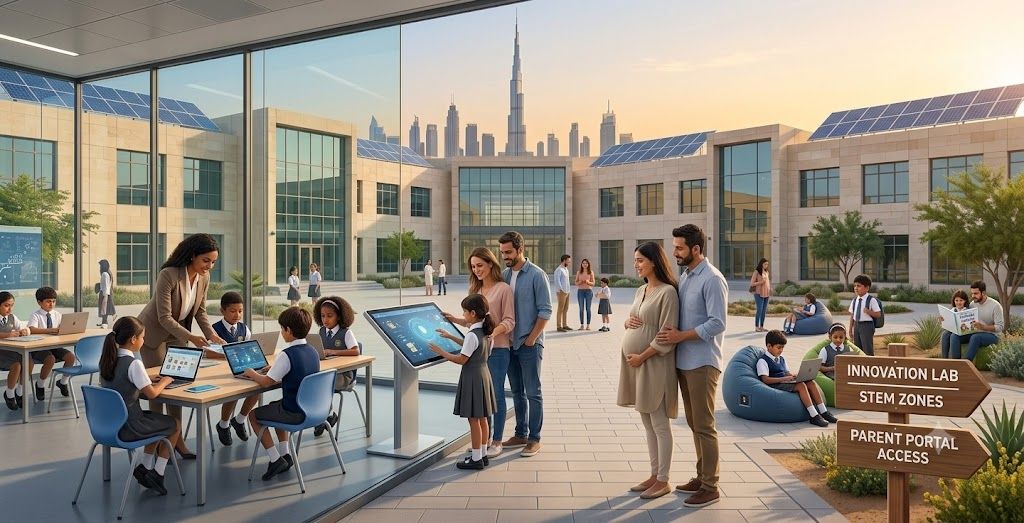
Digital Learning in UAE Schools: What's Changed and What Parents Need to Know
The UAE's EdTech Revolution
The UAE has positioned itself as a global leader in education technology. Following the COVID-19 pandemic — which accelerated the shift to digital learning across all UAE schools — the Ministry of Education and emirate-level regulators made significant investments in smart school infrastructure, digital curriculum delivery and teacher training in EdTech tools. Today, digital learning is not a supplement to classroom teaching in UAE schools — it is deeply integrated into the daily educational experience.
Smart Classrooms: What They Look Like in 2026
The standard modern classroom in a well-funded Dubai or Abu Dhabi private school in 2026 features:
- Interactive flat panel displays (replacing whiteboards and projectors) — typically 75–86 inch, touch-enabled, connected to the internet and school's learning management system
- Student devices — most British and American curriculum schools from Year 4 upward operate 1:1 device programmes (iPad or Chromebook); some CBSE schools operate shared device labs
- Learning Management Systems (LMS) — platforms like Google Classroom, Microsoft Teams for Education, Schoology or ManageBac (for IB schools) through which homework, resources, assessments and teacher feedback are delivered
- Document cameras and visualisers — for displaying student work or physical objects during lessons
- High-speed WiFi — across all teaching spaces and student common areas
EdTech Platforms Commonly Used in UAE Schools
- Khan Academy: Widely used for mathematics support across primary and middle school
- Seesaw: Student portfolio and parent communication platform; popular in early years and primary
- ManageBac: IB-specific planning, assessment and reporting platform
- Mathletics / Times Tables Rock Stars: Gamified mathematics practice platforms
- Accelerated Reader (Renaissance): Reading assessment and development programme
- Duolingo / Rosetta Stone: Language acquisition support for English language learners
- Coding platforms (Scratch, Code.org, Python): Used across multiple year groups for computational thinking
AI in UAE Schools: The 2026 Landscape
Artificial intelligence is beginning to enter UAE school classrooms in meaningful ways. The UAE's National AI Strategy 2031 includes education as a key pillar, and several initiatives are underway:
- AI tutoring assistants: A growing number of UAE schools are piloting AI-powered tutoring tools that adapt to individual student performance and provide personalised practice exercises
- Automated assessment and feedback: AI tools that provide instant feedback on writing tasks, helping teachers manage assessment workload while giving students faster feedback
- Adaptive learning platforms: Software that adjusts the difficulty and content of exercises based on real-time performance data — used in mathematics and reading particularly
- AI-generated lesson resources: Teachers increasingly use AI tools to generate differentiated worksheets, assessment rubrics and lesson plans
The use of generative AI (ChatGPT, Google Gemini, etc.) by students for homework and assignments is a growing challenge for schools. Most UAE schools now have formal AI academic integrity policies. It is worth asking your child's school what their policy is.
Online Safety: What Schools Are Doing
With 1:1 devices in schools and extensive home use of devices for homework, online safety is a priority for UAE school parents. Responsible schools in 2026 have:
- Formal Digital Citizenship curriculum embedded from Year 1 upward
- Filtered internet access on school networks
- Mobile device management (MDM) software on school-issued devices that limits access to non-educational content
- Regular parent workshops on online safety at home
- Designated IT/online safety leads who liaise between school and parents on incidents
Ask prospective schools how they teach digital citizenship, what filter or MDM system they use on student devices, and what their process is for reporting and responding to online safety incidents.
Screen Time: What's Healthy?
The British Paediatric Association and the American Academy of Pediatrics both recommend limiting recreational screen time for primary-age children to 1–2 hours per day, with no screens in the hour before bedtime. Educational screen time at school is considered distinct from recreational screen time, but total daily device use is worth monitoring.
For secondary students, screen time advice is more nuanced — the quality of use (active creation vs passive consumption) matters more than duration. However, the blue light impact on sleep quality is a consistent concern, and most child development experts recommend a device-free hour before bed regardless of age.
Questions to Ask Schools About Digital Learning
- Do students have school-issued devices or must they bring their own (BYOD)?
- What LMS is used and how do parents access it to monitor homework and feedback?
- What is the school's academic integrity policy regarding AI tools?
- How is digital citizenship taught and in which year groups?
- What MDM software is used on school devices? Can I see a list of allowed/blocked content categories?
- How are parents notified if there is an online safety incident involving my child?
Conclusion
Digital learning in UAE schools has moved from a supplement to a core delivery mechanism. For parents evaluating schools, the quality of a school's EdTech infrastructure — and critically, its digital citizenship and online safety programme — should be an active part of your selection criteria. A school that uses technology thoughtfully, teaches students to use it critically, and communicates transparently with parents about digital activity is a school well prepared for the education landscape of the next decade.
Related Articles
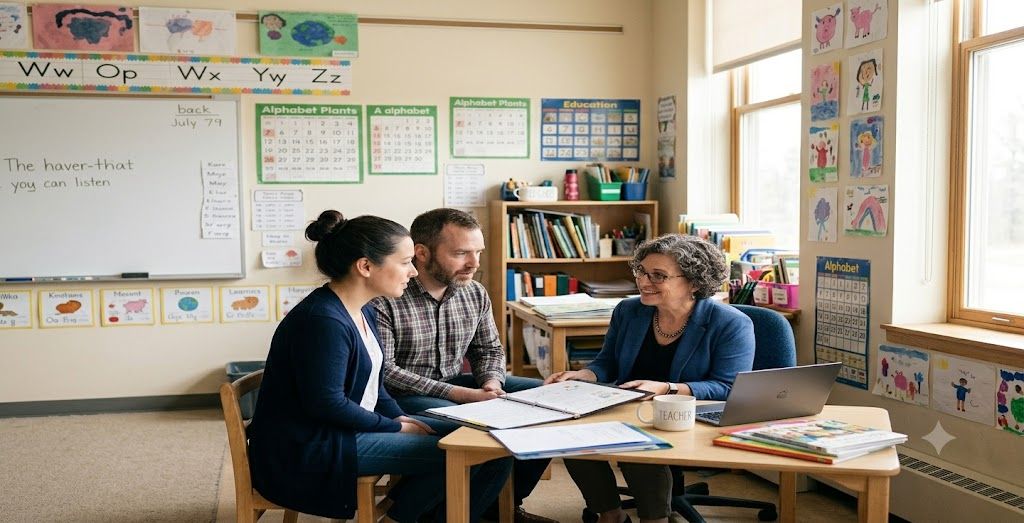
The Parent-Teacher Partnership: A Parent’s Guide to Building the Ultimate Support System
Building a strong partnership with your child's teacher is one of the best ways to boost their confidence, grades, and social skills. This guide offers simple, practical ways to build a unified support system from day one. Proactive Communication: Send a quick introductory email in the first 2–3 weeks of school, and keep the teacher updated on any major changes at home so they can offer extra support. Shared Expectations: Align home and school routines—like using "growth mindset" language during homework—to give your child a consistent, secure environment. Combine Expertise: Your deep knowledge of your child paired with the teacher's professional experience creates a strong safety net so no student slips through the cracks. By treating teachers as teammates, parents can turn school-year friction into a supportive, collaborative success.
Read more →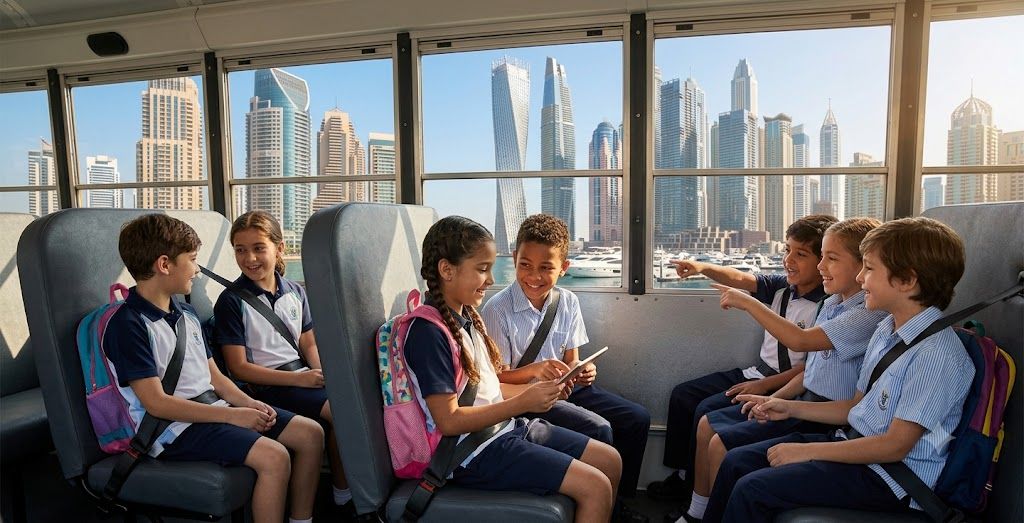
School Transport vs. Living Close: Managing the Real Costs of School Commutes in Dubai
Choosing between a cheaper neighborhood and a premium hub next to your child's school is a major financial decision for Dubai families. This numbers-driven breakdown compares the true cost of paying for school bus transport from a community like Jumeirah Village Circle (JVC) against paying a rental premium to live next door in a hub like Al Barsha. The Rental Premium Gap: Moving closer to premium school hubs like Al Barsha typically commands a rental premium of AED 30,000 to AED 50,000 per year for a standard family apartment or villa compared to value communities like JVC. The Compounding Bus Tax: School bus fees in Dubai average AED 8,000 to AED 12,000 per child annually; for a family with 3 children, long-distance transport costs alone can reach up to AED 36,000 per year, instantly erasing most of the rental savings. The Heavy Time Toll: Living further away subjects children to a daily time tax of 60 to 90 minutes spent in peak-hour traffic, adding significant stress and reducing time available for sleep, homework, and family life. Ultimately, this guide serves as a practical decision tool showing that cheaper rent is often an illusion once transport costs and multiple children enter the equation. By weighing the raw numbers against lifestyle quality, families can identify the true tipping point where paying a rental premium actually saves both money and peace of mind.
Read more →
Creating a Homework Sanctuary: How to Design a Study Space Kids Actually Want to Use
Creating a dedicated, sensory-friendly study space helps kids focus, build independence, and reduce study fatigue. This practical guide offers simple strategies to transform any corner of your home into an inviting homework spot—no dedicated office required. What you’ll learn: Smart Setup & Ergonomics: Why keeping study areas away from beds protects sleep and keeps kids alert. Sensory Control: How natural light and low digital distraction reduce cognitive fatigue during homework time. Routines & Organization: Simple hacks—like post-school brain breaks and portable supply caddies—that eliminate pre-homework friction. Involving your child in building their study zone builds long-term ownership, turning daily homework battles into calm, predictable wins.
Read more →