

After-School Activities in Dubai: What to Look for in a School
Why After-School Activities Matter
Research in developmental psychology consistently shows that children who participate in structured extracurricular activities outside the standard curriculum develop stronger social skills, higher self-esteem, better time management and greater academic engagement than those who don't. In Dubai's competitive school environment, after-school activities (ASAs) — also called extracurricular activities (ECAs) or co-curricular activities (CCAs) depending on the school — are increasingly seen as integral to a complete education rather than an optional add-on.
Moreover, for university applications — particularly to UK, US and Australian institutions — a meaningful extracurricular portfolio is increasingly important. Universities want to see students who are genuinely passionate and accomplished outside the classroom. The foundation for that portfolio is built through the ASA programme at school.
What a Strong ASA Programme Looks Like
Breadth of Offering
Quality schools offer ASAs across at least four domains:
- Sport: Multiple team and individual sports beyond just football. Look for swimming, athletics, basketball, badminton, cricket, tennis and at least one combat or individual performance sport.
- Performing Arts: Drama productions, choir, instrumental music, dance and (increasingly) film and media production.
- Visual Arts and Design: Art studio access, ceramics, photography, graphic design.
- Academic and Intellectual: Debate and Model UN, Science clubs, Robotics and coding, Mathematics competitions (UKMT, AMC), language clubs.
- Community Service: Environmental clubs, charity fundraising, peer mentoring, community partnerships.
Quality of Delivery
A long list of activities means nothing if they are delivered by classroom teachers with no specialist expertise after a long teaching day. The best schools in Dubai employ specialist coaches and instructors for their major activity areas — particularly for competitive sport, music and drama. Ask the school:
- Who runs the ASA programme — are they qualified specialists or classroom teachers?
- Do sports teams compete externally (inter-school leagues, BSME tournaments)?
- Do performing arts students have public performance opportunities (not just internal)?
Competitive Opportunities
Dubai has a well-developed inter-school sports and academic competition ecosystem:
- DASSA (Dubai Association of School Sports Administrators): Organises inter-school sports leagues and championships covering 15+ sports
- BSME (British Schools in the Middle East): Annual tournaments for British curriculum schools across sport, arts, STEM and debating
- MENA Model UN: Regional Model United Nations conferences
- UAE National Robotics Championship: Annual STEM competition
- Dubai Science Festival: Student project presentations
A school that regularly participates in (and wins trophies at) external competitions demonstrates a genuine commitment to ASA quality.
Typical ASA Costs in Dubai
After-school activities in Dubai are generally charged separately from tuition fees. Typical costs per activity per term:
- General sport (football, basketball): AED 400–800 per term
- Swimming (school pool sessions): AED 600–1,200 per term
- Individual instrument lessons: AED 800–1,800 per term
- Drama club / school production: AED 500–1,000 per term
- Robotics / coding: AED 700–1,500 per term
- Language classes (Arabic, Mandarin, French): AED 400–900 per term
A child participating in two or three activities per term should budget AED 1,500–4,000 per term in ASA fees. Some premium schools include a certain number of ASA sessions within the tuition fee — ask whether this applies before comparing schools on headline fees alone.
The Dubai Heat Factor
A practical consideration unique to Dubai: outdoor activities are significantly limited during the summer months (May–September) when temperatures exceed 40°C and humidity is extreme. Quality schools address this in two ways:
- Ensuring outdoor sports facilities have shade structures and adequate misting systems for transitional months
- Moving outdoor activities to covered or air-conditioned spaces during the hottest months
Ask schools specifically how their outdoor sports programme operates during Term 3 (April–June). Schools without adequate covered facilities may effectively shut down their sports programme during the final months of the academic year.
IB CAS and the Formalisation of Co-Curricular Activities
For students following the IB Diploma Programme, CAS (Creativity, Activity, Service) is a core requirement — not optional. Students must complete a minimum of 150 hours of CAS activities and reflect on their learning throughout. This formalises what informal ASA programmes do informally: it requires students to be intentional, reflective and progressive in their extracurricular engagement.
For IB schools, the quality and breadth of the CAS programme is a meaningful indicator of the school's overall IB commitment. Ask to see examples of student CAS portfolios and find out whether the school has formal CAS supervisors assigned to each student.
Tips for Parents
- Visit schools at the end of the school day — this is when ASAs are running and you can see the real programme in action, not just a prospectus list.
- Speak to current school parents about their children's experience of ASAs — which activities are genuinely good, and which are underwhelming.
- Be realistic about your child's schedule. A child travelling 45 minutes home on the bus after ASA finishes at 4:30pm arrives exhausted. Proximity to ASA finishing times matters as much as the programme itself.
- For secondary students aiming at competitive university applications, encourage depth over breadth — two or three activities pursued seriously over several years is more impressive than ten activities for one term each.
Conclusion
After-school activities are not a luxury — they are a fundamental component of your child's education and development. When evaluating schools in Dubai, look for breadth, quality of delivery, external competitive opportunities and a genuine culture of participation. Use Search Your School to find schools that have been recognised for their extracurricular provision in KHDA inspection reports.
Related Articles
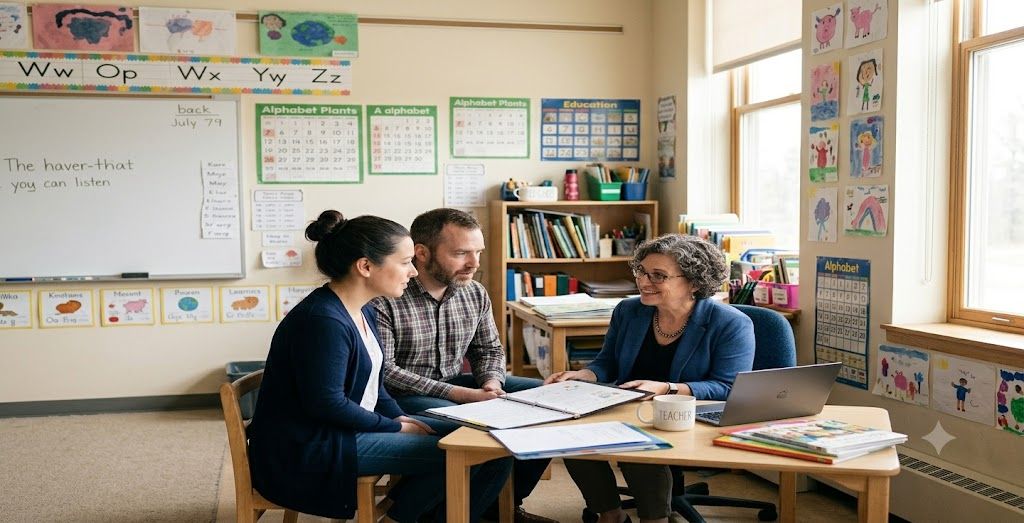
The Parent-Teacher Partnership: A Parent’s Guide to Building the Ultimate Support System
Building a strong partnership with your child's teacher is one of the best ways to boost their confidence, grades, and social skills. This guide offers simple, practical ways to build a unified support system from day one. Proactive Communication: Send a quick introductory email in the first 2–3 weeks of school, and keep the teacher updated on any major changes at home so they can offer extra support. Shared Expectations: Align home and school routines—like using "growth mindset" language during homework—to give your child a consistent, secure environment. Combine Expertise: Your deep knowledge of your child paired with the teacher's professional experience creates a strong safety net so no student slips through the cracks. By treating teachers as teammates, parents can turn school-year friction into a supportive, collaborative success.
Read more →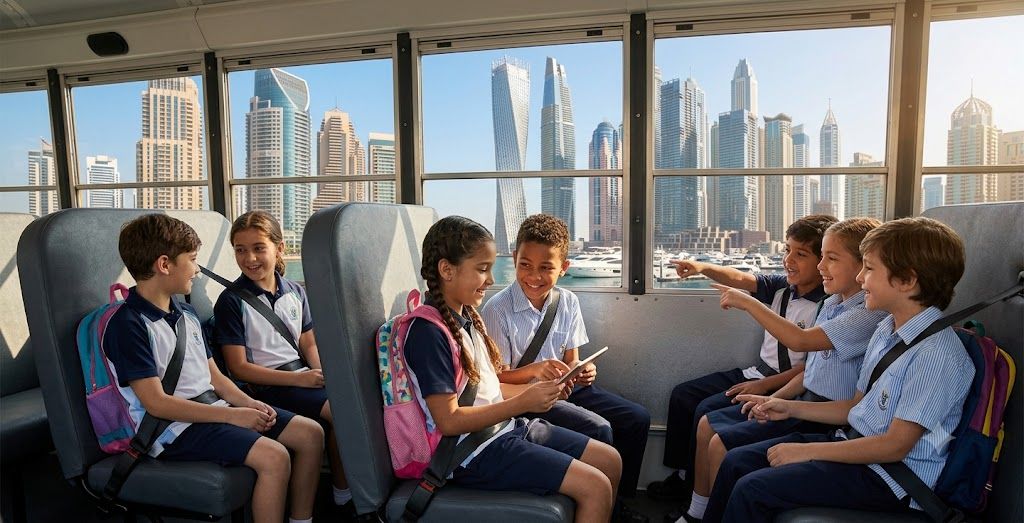
School Transport vs. Living Close: Managing the Real Costs of School Commutes in Dubai
Choosing between a cheaper neighborhood and a premium hub next to your child's school is a major financial decision for Dubai families. This numbers-driven breakdown compares the true cost of paying for school bus transport from a community like Jumeirah Village Circle (JVC) against paying a rental premium to live next door in a hub like Al Barsha. The Rental Premium Gap: Moving closer to premium school hubs like Al Barsha typically commands a rental premium of AED 30,000 to AED 50,000 per year for a standard family apartment or villa compared to value communities like JVC. The Compounding Bus Tax: School bus fees in Dubai average AED 8,000 to AED 12,000 per child annually; for a family with 3 children, long-distance transport costs alone can reach up to AED 36,000 per year, instantly erasing most of the rental savings. The Heavy Time Toll: Living further away subjects children to a daily time tax of 60 to 90 minutes spent in peak-hour traffic, adding significant stress and reducing time available for sleep, homework, and family life. Ultimately, this guide serves as a practical decision tool showing that cheaper rent is often an illusion once transport costs and multiple children enter the equation. By weighing the raw numbers against lifestyle quality, families can identify the true tipping point where paying a rental premium actually saves both money and peace of mind.
Read more →
Creating a Homework Sanctuary: How to Design a Study Space Kids Actually Want to Use
Creating a dedicated, sensory-friendly study space helps kids focus, build independence, and reduce study fatigue. This practical guide offers simple strategies to transform any corner of your home into an inviting homework spot—no dedicated office required. What you’ll learn: Smart Setup & Ergonomics: Why keeping study areas away from beds protects sleep and keeps kids alert. Sensory Control: How natural light and low digital distraction reduce cognitive fatigue during homework time. Routines & Organization: Simple hacks—like post-school brain breaks and portable supply caddies—that eliminate pre-homework friction. Involving your child in building their study zone builds long-term ownership, turning daily homework battles into calm, predictable wins.
Read more →