

IGCSE vs A-Levels: A Complete Guide for Dubai Parents
Navigating British Qualifications: Why It Matters
For parents whose children attend British curriculum schools in Dubai, the examination years — Years 10–11 for IGCSE and Years 12–13 for A-Levels — represent the culmination of twelve years of education and the gateway to university. Understanding how these qualifications work, how they are graded, and how universities use them is essential for supporting your child effectively through these critical years.
What is the IGCSE?
The International General Certificate of Secondary Education (IGCSE) is the international version of the British GCSE examination, developed by Cambridge Assessment International Education (CAIE). It is taken at the end of Year 11 (ages 15–16) and covers a broad range of subjects — most students in Dubai take between 8 and 11 IGCSE subjects.
The IGCSE is not a leaving qualification — it is a stepping stone to A-Levels, the Pre-U or other post-16 qualifications. However, it is widely recognised by universities worldwide (including UAE, UK, US, Australia and Canada) as evidence of a student's secondary school achievement.
IGCSE Grading
IGCSE results are reported on a grade scale of A*–G (with A* being the highest). Cambridge also provides a percentage uniform mark scale (UMS) that allows comparison across different subject papers. A* requires an overall grade of A and an A* grade in the examination component. Grades A*–C are considered "pass" grades by most universities and employers.
Some schools in Dubai offer the standard Cambridge IGCSE alongside the Cambridge IGCSE (9–1) — a version that uses a numerical grading scale (9 being the highest, similar to the England-based GCSE). Both are equally valid; check which version your school follows.
What Are A-Levels?
A-Levels (Advanced Levels) are the primary UK pre-university qualification and the standard sixth-form examination for British curriculum students. Taken in Years 12–13 (ages 16–18), students typically choose three (sometimes four) subjects and study each in significant depth over two years, sitting final examinations in June of Year 13.
The combination of A-Level subjects studied is one of the most important decisions a student will make during their school career — it directly determines which university courses they can apply for and affects the offers they receive.
A-Level Grading
A-Levels are graded A*–E, with A* being the highest grade (introduced in 2010 to differentiate the very top performers). Universities typically make conditional offers based on A-Level grade predictions, with specific grade requirements stated for each course (e.g., AAB for Law at King's College London).
How Are Subject Choices Made?
At IGCSE (Year 10 entry)
Most schools require students to choose their IGCSE subjects at the end of Year 9. While some subjects (English Language, English Literature, Mathematics, Science) may be compulsory, students typically choose from a range of humanities, arts and languages. The IGCSE subject choice has less direct impact on university than A-Level choices, but it is worth considering: if your child knows they want to study Medicine at A-Level, taking Double Science (or Triple Science) at IGCSE is important.
At A-Level (Year 12 entry)
A-Level subject selection is far more consequential. Students (usually) choose three subjects that they will study for two years. Key principles:
- Science-based courses (Medicine, Engineering, Computer Science) typically require Chemistry and/or Mathematics at A-Level
- Economics and Business degrees often require (or strongly prefer) Mathematics
- Law, PPE and Social Sciences are open to a wide range of A-Level combinations, but essay-based subjects are advantageous
- Arts and Design courses often require a portfolio-based A-Level (Art, Design, Photography)
IGCSE vs A-Level: Key Differences at a Glance
IGCSEA-Level Age15–16 (Year 10–11)16–18 (Year 12–13) Subjects8–11 subjects3–4 subjects GradingA*–GA*–E Duration2 years2 years University entryNo (stepping stone only)Yes (primary qualifier) RetakesYes (November or June)Yes (January limited, June)University Applications: How Grades Are Used
UK universities make conditional offers based on A-Level predicted grades, with IGCSE results supporting the application. Specifically:
- UCAS (UK university applications) requires students to submit their predicted A-Level grades before results are known. IGCSE results are included as part of the educational history.
- Some highly competitive courses (Medicine at Oxford, for example) have minimum IGCSE requirements (e.g., Grade A or above in certain subjects) — check specific requirements early in Year 11.
- US universities use A-Level results differently — they are viewed as evidence of academic rigor but do not replace the SAT/ACT requirement for most schools.
Supporting Your Child Through Exam Years
Parents play a crucial role in supporting students through IGCSE and A-Level years without creating additional pressure:
- Create a calm study environment at home. Consistent workspace, minimal distractions, reliable internet.
- Help with time management, not content. Your child's teachers know the curriculum; your role is to help manage the workload across multiple subjects.
- Maintain routines for sleep, meals and exercise. These are more important for performance than extra study hours.
- Discuss university aspirations in a low-pressure way. Children who feel heard about their interests make better subject choices.
- Consider private tutoring selectively — one targeted subject where your child is struggling, rather than blanket tutoring across all subjects.
Summary
IGCSE and A-Levels are two distinct but connected stages of the British qualification framework. IGCSE is a broad secondary foundation; A-Levels are a deep, specialist pre-university programme. Both are globally recognised and highly respected. The most important decisions are A-Level subject choice and the supporting structure of study during these years. Search Your School can help you find British curriculum schools in Dubai that have strong sixth-form provision — filter by KHDA rating and read inspection reports for detail on sixth-form quality.
Related Articles

How to Choose the Right Curriculum for Your Child in Dubai
A practical, parent-focused guide to choosing the right school curriculum in Dubai — matching your child's learning style, your family's plans and your university aspirations.
Read more →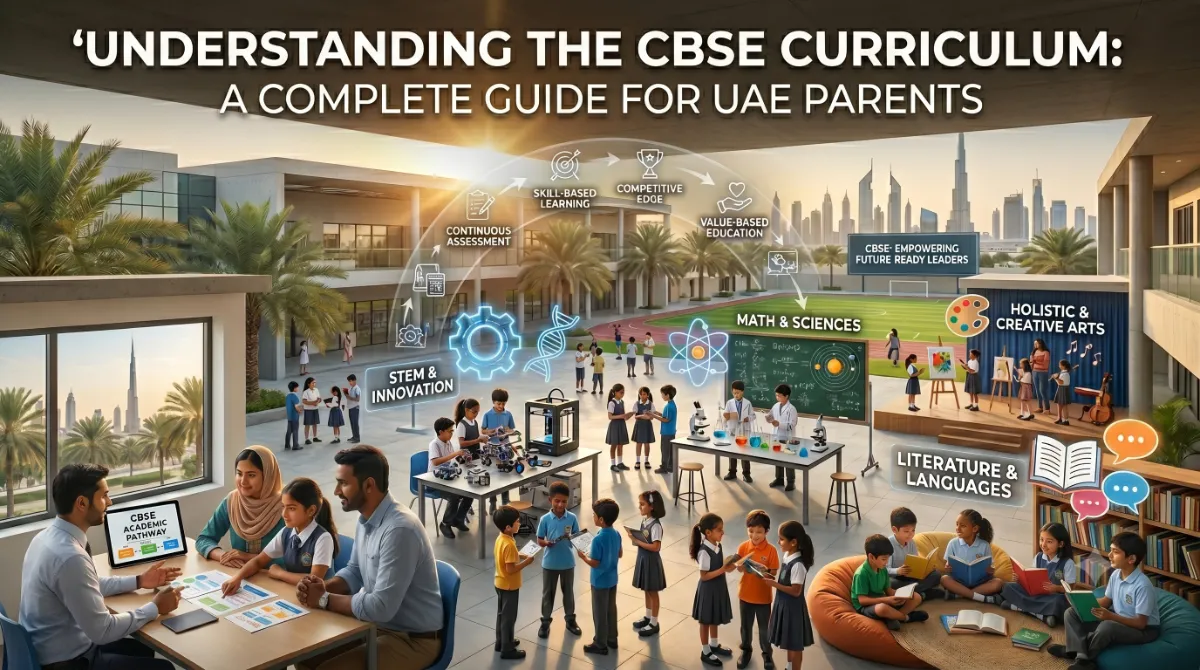
Understanding the CBSE Curriculum: A Complete Guide for UAE Parents
Everything UAE parents need to know about the CBSE curriculum — structure, subjects, board exams, and university pathways.
Read more →
Understanding the UAE Ministry of Education Curriculum
What is the UAE MoE curriculum? Who studies it and why? A guide for parents considering the UAE national curriculum for their children.
Read more →