

How to Choose the Right Curriculum for Your Child in Dubai
The Most Important Question in Dubai Schooling
"Which curriculum should my child follow?" is the question most parents ask first — and for good reason. In a school market where British, American, IB, CBSE, French, Australian and other curricula all coexist, choosing the right framework shapes the next 12–15 years of your child's education and directly influences their university options.
The good news is that any of the major curricula available in Dubai can provide an excellent education. The question is which one best fits your family's specific circumstances. This guide walks you through the key decision factors.
Factor 1: Where Do You Plan to Go to University?
This is the single most important factor for families with older children, or for families who have clear university aspirations early:
- UK universities: British curriculum (A-Levels) is the natural pathway; IB Diploma is equally well accepted.
- US universities: American curriculum (AP/High School Diploma) is the natural pathway; IB is also well regarded; British A-Levels accepted but require additional SAT/ACT.
- Australian / Canadian universities: Both British and American curricula widely accepted; flexible entry requirements.
- Indian universities (JEE / NEET): CBSE is the required curriculum for direct eligibility to Indian entrance exams.
- UAE universities: Most UAE universities accept all major curricula; check specific grade requirements for competitive programmes.
- Global / undecided: IB Diploma is the most universally accepted qualification for university entry worldwide.
Factor 2: How Long Are You Staying in Dubai?
Curriculum choice is significantly affected by your anticipated stay in the UAE:
- 1–3 years: Choose the same curriculum your child was on before arriving — switching and switching back creates unnecessary disruption.
- 3–5 years: If your child arrives at primary level, this is sufficient time to establish a curriculum. If arriving at secondary level, consider whether you will be in Dubai long enough to complete the full qualification phase.
- Long-term / permanent: Full choice available. Choose based on your children's academic profile and your university aspirations.
Factor 3: Your Child's Learning Style
Each curriculum suits different types of learner:
Learning StyleBest Curriculum Fit Deep, focused learner; exam-strongBritish (A-Levels) Broad interests; continuous assessmentAmerican Curious, research-driven, global outlookIB Strong in maths/science; structuredCBSE / ICSE Native French speaker / FrancophoneFrench BaccalaureateFactor 4: Your Family's Nationality and Background
Many families find that the curriculum aligning with their home education system provides continuity and reduces transition difficulty. Indian families who anticipate returning to India for higher education almost always choose CBSE. British families who plan to retire to the UK often prefer the British curriculum. Arab families with aspirations towards Arab or French universities often choose the French or UAE national curriculum.
However, nationality is not destiny. Many Indian families choose British or IB curricula for the global university pathway it provides. Many British families choose IB for its international-mindedness. Follow the framework — don't assume nationality determines the right choice.
Factor 5: Budget
Curriculum type correlates roughly with fee band in Dubai:
- Most affordable: CBSE, MoE (UAE national) — AED 6,000–28,000
- Mid-range: British (mid-tier), American (mid-tier) — AED 26,000–55,000
- Premium: British (Outstanding schools), IB, American (premium) — AED 55,000–103,000
Budget should not determine curriculum — but it does limit your school options within a given curriculum. A family committed to the British curriculum on a mid-range package should compare schools in the AED 30,000–55,000 fee band, where there are excellent options.
A Decision Framework
Answer these five questions and your curriculum choice will often become clear:
- Where does my child most likely want to go to university? (Country / region)
- How long are we planning to stay in Dubai?
- What curriculum is my child currently on (if transferring mid-school)?
- Does my child learn better through continuous assessment or high-stakes exams?
- What is my annual education budget per child?
Switching Curricula: When Is It Right?
Switching curricula mid-school is sometimes necessary and sometimes genuinely beneficial. The key rules:
- Switch as early as possible — under age 10 is easiest; under 7 is seamless.
- Never switch between Years 10–13 / Grades 9–12 unless absolutely unavoidable.
- If switching, ensure the receiving school's SENCO or admissions team conducts a proper bridging assessment.
- Allow your child a settling period — typically one full term — before assessing whether the switch was the right decision.
Conclusion
Choosing the right curriculum is ultimately a family decision that balances aspiration, practicality and budget. No single curriculum is best for every family — but the right curriculum for your family, at the right school, will provide a foundation for your child's future that is genuinely world-class. Use Search Your School to browse every curriculum type available in the UAE and filter schools by rating, area and fee band.
Related Articles

IGCSE vs A-Levels: A Complete Guide for Dubai Parents
What's the difference between IGCSE and A-Levels? How do they affect university applications? Everything parents of British-curriculum students need to know.
Read more →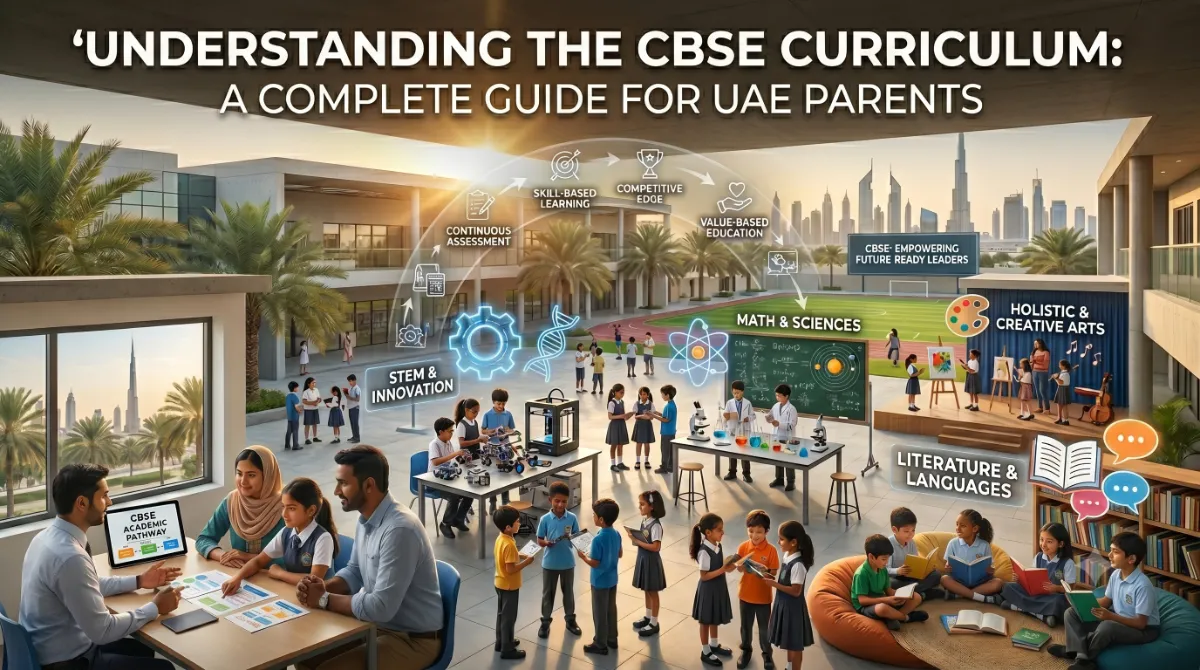
Understanding the CBSE Curriculum: A Complete Guide for UAE Parents
Everything UAE parents need to know about the CBSE curriculum — structure, subjects, board exams, and university pathways.
Read more →
Understanding the UAE Ministry of Education Curriculum
What is the UAE MoE curriculum? Who studies it and why? A guide for parents considering the UAE national curriculum for their children.
Read more →