
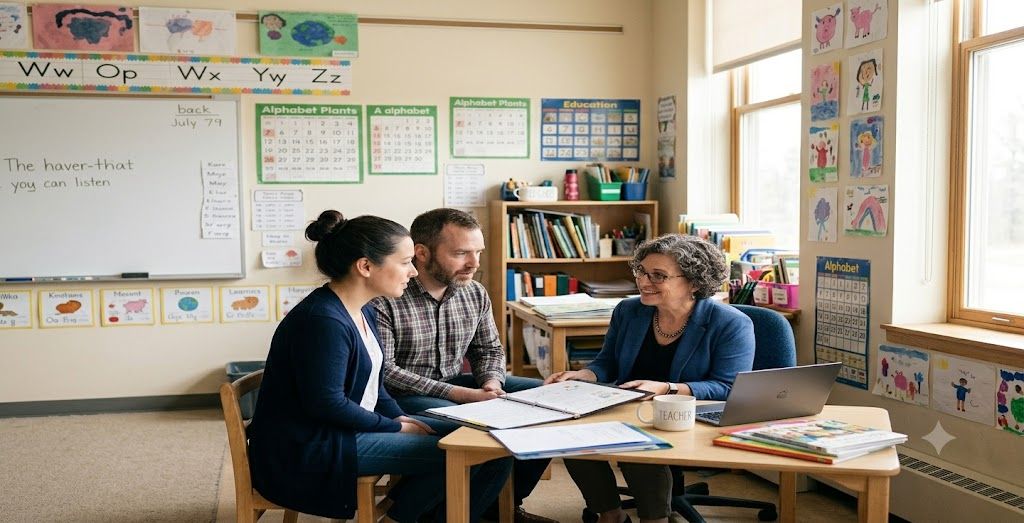
The Parent-Teacher Partnership: A Parent’s Guide to Building the Ultimate Support System
As parents, we want nothing more than to see our children thrive. We worry about their grades, their friendships, and their happiness. But sometimes, the school day can feel like a black box. Once we drop our kids off at the door, we aren't entirely sure what happens until the final bell rings.
This is where the parent-teacher partnership becomes your greatest tool. When parents actively collaborate with teachers, students show higher academic achievement, better social skills, and increased confidence.
You don't have to be a classroom volunteer to build a strong connection. Here is how you can take the lead in creating a powerful, supportive partnership with your child's teacher this year.
1. Establish Open Lines of Communication Early
Do not wait for report cards, parent teacher conferences, or even worse, a call home about a problem to initiate contact.
Reach out early: Send a brief email in the first few weeks of school just to introduce yourself. Share a quick snapshot of your child’s personality, their favorite hobbies, and how they learn best.
Keep them in the loop: Life happens. If there is a major shift at home, such as a new sibling, a move, a sick relative, or even a sudden change in sleep patterns, let the teacher know. They do
not need all the details, but knowing your child is going through a transition helps them offer extra patience and support during the school day.
2. Align on Goals and Routines
When your child hears the same positive messages at school and at home, it creates a sense of security that allows them to focus on learning.
Mirror classroom expectations: Ask the teacher about their classroom rules or routine and see how you can bring elements of that home. For example, if the teacher emphasizes "growth mindset" language (like saying "I can't do this yet" instead of "I can't do this"), using those same phrases during homework time reinforces the habit.
Problem-solve as a team: If your child is struggling academically or socially, resist the urge to get defensive. Instead, approach the teacher with a collaborative mindset. Frame the conversation around teamwork: "We’ve noticed some frustration with reading homework at home. What are you seeing in class, and how can we work together on a game plan?"
3. Respect the Teacher's Expertise (and Value Your Own)
A great partnership is built on recognizing that both you and the teacher bring unique, essential expertise to the table.
You are the expert on your child: You know their history, their fears, what motivates them, and what makes them laugh. Your insights are invaluable to a teacher trying to connect with thirty different students.
The teacher is the expert on the classroom: They understand developmental milestones, curriculum standards, and how your child functions within a peer group. Trusting their professional judgment makes it much easier to accept their feedback and implement their advice.
The Big Picture: When your personal knowledge of your child combines with the teacher's educational expertise, it creates a 360-degree support system that ensures your child won't slip through the cracks.
Conclusion: We Are on the Same Team
At the end of the day, it helps to remember one simple truth: you and your child’s teacher want the exact same thing. You both want to see your child succeed, grow, and feel happy every single day.
By taking the initiative to communicate openly, staying aligned on goals, and treating the teacher as a valued partner rather than just an instructor, you help create a warm, unified front. When your child sees that the adults in their life are working together, they feel secure, valued, and ready to learn. Let's make this school year a collaborative success!
Related Articles

School Transport vs. Living Close: Managing the Real Costs of School Commutes in Dubai
Choosing between a cheaper neighborhood and a premium hub next to your child's school is a major financial decision for Dubai families. This numbers-driven breakdown compares the true cost of paying for school bus transport from a community like Jumeirah Village Circle (JVC) against paying a rental premium to live next door in a hub like Al Barsha. The Rental Premium Gap: Moving closer to premium school hubs like Al Barsha typically commands a rental premium of AED 30,000 to AED 50,000 per year for a standard family apartment or villa compared to value communities like JVC. The Compounding Bus Tax: School bus fees in Dubai average AED 8,000 to AED 12,000 per child annually; for a family with 3 children, long-distance transport costs alone can reach up to AED 36,000 per year, instantly erasing most of the rental savings. The Heavy Time Toll: Living further away subjects children to a daily time tax of 60 to 90 minutes spent in peak-hour traffic, adding significant stress and reducing time available for sleep, homework, and family life. Ultimately, this guide serves as a practical decision tool showing that cheaper rent is often an illusion once transport costs and multiple children enter the equation. By weighing the raw numbers against lifestyle quality, families can identify the true tipping point where paying a rental premium actually saves both money and peace of mind.
Read more →
Creating a Homework Sanctuary: How to Design a Study Space Kids Actually Want to Use
Creating a dedicated, sensory-friendly study space helps kids focus, build independence, and reduce study fatigue. This practical guide offers simple strategies to transform any corner of your home into an inviting homework spot—no dedicated office required. What you’ll learn: Smart Setup & Ergonomics: Why keeping study areas away from beds protects sleep and keeps kids alert. Sensory Control: How natural light and low digital distraction reduce cognitive fatigue during homework time. Routines & Organization: Simple hacks—like post-school brain breaks and portable supply caddies—that eliminate pre-homework friction. Involving your child in building their study zone builds long-term ownership, turning daily homework battles into calm, predictable wins.
Read more →
The Friday 11:30 AM Cut-Off: Navigating Dubai's New School Timings
New Dismissal Policy: All Dubai private schools and early childhood centers have officially shifted to a permanent Friday morning dismissal time of 11:30 AM. Alignment with Prayer Times: This regulatory update from the KHDA aligns with the nationwide shift of Friday congregational prayers to 12:45 PM. School Routine Changes: To adapt to shorter Friday hours, campuses are rearranging schedules, optimizing bus routes, and providing on campus supervision for working parents. Online Learning Options: High school students in Grade 6 or Year 7 and above can access remote online learning on Fridays if the school secures KHDA and parental approval. Logistical Tips for Families: Parents can minimize stress by arranging carpools, establishing immediate post pickup lunch routines, and organizing weekend homework early.
Read more →